
Sophie’s been revisiting a beloved place and a teenage favourite…
This week I have been into green and lovely Sussex to see Parsifal at Glyndebourne. As a result this blog is going to be pure unadulterated splurge. I make no apology. There will be no attempt at analysis. Just splurge and memories. So you have been warned.
It was always going to be an experiment.
I did not know Parsifal the opera. I guess, to be fair, I still don’t. But as a teenager, the Prelude was a huge favourite. Working my way through a mighty impatience with the big world, I turned to music.
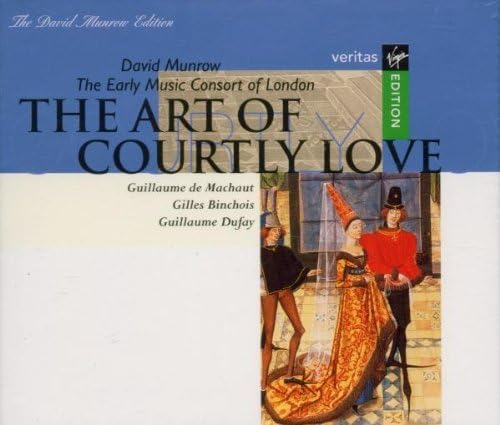 My taste was pretty wide. I still have some of those beloved old records: plain song, through David Munrow’s Courtly Love, to Bob Dylan. The Prelude, however, has not survived. So when I saw that Glyndbourne was doing the opera this season, I wanted to revisit my long neglected favourite.
Gyndebourne is paradisal. If anywhere, the magic return to youth could work there. So, with two equally experimental friends, I ventured forth.
Wagner and Me

Full confession here. I admit freely that I’m not a Wagnerian. In my teens I went to the Ring Cycle (vertiginously high in the gods at Covent Garden) and had all the folkloric chills and awe that my then mentor required. Never felt the need to do it again. Never bought the records.
Over the years there have been other Wagner operas, usually at some kind person’s invitation. Indeed, I recalled to a neighbour recently that I’ve seen Tristan und Isolde three times, most recently at Covent Garden. (Only the dangerously sloped scenery aroused interest. Well, anxiety, anyway.) Each performance left me with decreasing justification for staying awake. Covent Garden, I decided, was my last shot at Tristan und Isolde, even if invited by my very best friend.
Partly it was the post-mortem Nazification, I suspect. Poor old Wagner can’t be blamed for the fact that Hitler was his loyal fanboy and pretty much imposed a corresponding enthusiasm on the rest of Nazi hierarchy.

Yes, the nastiest bunch of thugs, bullies and psychopaths that we’ve seen in recent European history.
Not Wagner’s fault, but the company you find yourself in smells ba-a-ad. And I find it lingers.
Recently, too, I’ve been researching the Third Reich for my 1938-set work in progress, Gentleman in Jeopardy. And reading around it a lot, including the wonderful Jane Thynne’s Clara Vine series, set in Nazi Berlin in the 30s.
That probably didn’t help.
Glyndebourne Origins
 Ah, Glyndebourne. Originally it was a Tudor house set in a fold of the Sussex Downs, protected by a gentle hill, peaceful meadows and watered by a necklace of small lakes. Not aristocratic grand. Human-sized grand. A gentleman’s house.
The Christie family acquired it through marriage in the Georgian era. John Christie, the Festival’s founder, started by having amateur music evenings at home. At one of these in 1931, Audrey Mildmay, a soprano with the Carl Rosa company, came along to boost the singing. The two were married that June!
They went on honeymoon to Europe and visited Salzburg and Bayreuth music festivals. I’ve heard that the latter, very much a family operation, inspired Christie, who would have liked Parsifal to be one of Glyndebourne’s first productions. (Phew!)
 The team he employed were early anti-Nazi exiles post the 1933 German election. Fritz Busch (who had decamped to Buenos Aires after being sacked by the Nazi-dominated Landtag in Dresden) came in as music director. He recommended a former very successful collaborator, Carl Ebert, as artistic director. Then Ebert commissioned his former assistant, Rudolf Bing, by then out of work in Vienna, to seek out singers for the inaugural 1934 season. Under their guidance, Glyndebourne became a primarily Mozart house and proceded to revolutionise British opera production.
Glyndebourne and Me
 My early visits to Glyndebourne were as a guest. On one occasion a fellow guest, who had attended those early performances, reminisced about the joyous enthusiasm of performers, management and audience alike. “We all felt like friends,” he said. “Of course, back then, we were certain it couldn’t last.”
He didn’t tell me, but I Iater discovered that at the outbreak of war both Busch and Ebert had to leave to avoid being interned as enemy aliens. Nevertheless in 1940 Glyndebourne mounted a travelling production of The Beggar’s Opera directed by John Gielgud, starring Michael Redgrave as MacHeath with Audrey Mildmay as virtuous Polly Peachum. How wonderful, but how must it have felt?
 When I go to Glyndbourne, I walk into a space where all the music I have heard there is still present. All the conversations, too, friendly and alert. And not just my own music and conversation, but the combined experience of everyone else who has been there. It is incredibly peaceful, but also exciting — and slightly off the wall. Like the little sleeping pug on the wall surrounding the fountain in Mary Christie’s rose garden.
Heaven!
Romance of Glyndebourne
 Here, I’m going to take refuge in a little film from 1955. You can buy the whole thing from Glyndebourne but here is the trailer on Youtube. It is called On Such a NIght and it takes you right back to a Glyndebourne summer evening in the fifties. (Busch and Ebert were back by then, which is deeply pleasing.) There’s a proper puffing billy train; men in dinner jackets and ladies in wide- skirted frocks, with picnic hampers, taking the bus from Lewes. On the stage, it’s The Marriage of Figaro. Every detail is a source of wonder to the open-hearted young American visitor to London, from whose point of view we are mostly watching.
 That title is pure romance too. Well, it is if you allow for varying the initial pronoun. Not from an opera, though. The Merchant of Venice.
….. in such a night as this,
When the sweet wind did gently kiss the trees
And they did make no noise, in such a night
Troilus methinks mounted the Troyan walls
And sigh’d his soul toward the Grecian tents,
Where Cressid lay that night.
Young Christian Lorenzo and Jewish Jessica talk of the yearning of other star-crossed lovers, tease each other, and then take practical steps to their own happy ending.
All are perfect associations for Glyndebourne where so many of the heart-stirring operas are about romantic love — requited, unrequited, misled, betrayed, grandiose, or human-sized, but ultimately brought to a moving conclusion, be it tragic or, like Lorenzo and Jessica, practical and kind.
The Opera Parsifal Staging
 So — even though it had no romance, would Parsifal mean as much to me as it did when I was a moody teen? l floated off on the Prelude often, after homework or swotting for exams. It made me feel grounded and rather spiritual.
The orchestra was the London Philharmonic conducted by Robin Ticciati and they played the Prelude with great flow and lyricism. That haunting horn call sent me straight back to pre-exams and the relief of putting work aside and surrendering to gorgeous sound. And then, in the middle of the Prelude, the curtain suddenly went up and a sentence about Cain and Abel appeared, before it fell again.
 Huh? I thought Parsifal was about the virgin knight who, of all of King Arthur’s Knights of the Round Table, was the only one sufficiently pure of heart to find the Holy Grail.
(Wagnerians will here conclude, rightly, that I had not read the opera’s story beforehand. I had, however, read the programme synopsis. And didn’t remember Cain and Abel getting a mention.)
The opera was, in many ways, beautifully staged, with striking tableaux, and much use made of stillness. Set at the end of the 19th century, it opened with a Jane Eyre figure in governess grey, sitting composedly by a steel hostel-type bed, on which lay a suffering man. Both were watched by a tall man in clerical bands. All were impassive.
 The atmosphere was, well, Gothic horror.
I recalled Christopher Lee’s Dracula movies and quickly wiped it out, chiding myself for being trivial.
Sadly, it was not for the last time.
The Opera Parsifal Story and Music
In terms of story structure, Act 1 is appalling. The observer cleric spent vast time telling the backstory. It was repetitive and confusing. Even the surtitles didn’t help much.
 The patient was Amfortas, a sort of Crown Prince, with an endlessly bleeding wound. His aged father kept urging him to “perform the office of the Grail”. Details and significance unspecified, a recurring issue.
Amorfortas said it hurt him too much. Klingsor—an evil knight? wizard? Cain? —had apparently wounded him with a spear. Everyone was waiting for a holy fool to come along and seize the spear from Klingsor and heal Amfortas. The word “Blood” came up a lot.
 Parsifal arrived, looking uncouth, having shot a swan. Actually the clerical narrator’s lament for the swan was genuinely moving. Unfortunately, unlike everything else, it didn’t last long.
By now the home team had had been joined by a lot of “knights and esquires” according to the programme. They looked like clerks of the East India Company.
After much argument and complaining, Amfortas gave in and uwrapped the Grail — basically a beaker and a plate — in front of Parsifal who watched but refused to take part when apparently invited to do so.
The ritual might have been some sort of taking communion, but from where I was sitting it looked horribly as if Amfortas was literally offering to be bitten, at which Parsifal understandably threw up his hands in refusal. (Oh bother you, Christopher Lee.)
By now it was clear to me that we were in the grip of motiveless magic. The Act ended and we headed out into the garden for late afternoon sunshine and a little champagne.
“Weird,” said one of my companions, trying to be nice about the opera so far.
“Unhinged,” I said, from the heart.
Parsifal the Experience
Rossini is credited with saying that Wagner had “beautiful moments but terrible quarters of an hour.” The earliest source for that seems to be 1881 in The Theatre: A Monthly Review, published in London. By the end of Act 1, I was ready to endorse that judgement. But truly, the story was so chaotic that the music was fighting for its life most of the way.
 Act 2 was a little simpler. The enigmatic female lead, Kundry, turned temptress in this and summoned a cluster of “flower maidens” to support her in seducing Parsifal. She also played the part of his dying mother and attempted to kiss him in that guise.
Huh?
He resisted. She was pretty pissed off.
I was so completely bewattled by all this that I could actually hear other music in my head during this sequence. I admit it was Poor Wandering One from The Pirates of Penzance and I would be ashamed if I weren’t so thoroughly amused.
 Kundry appeals to Parsifal to help her. (How? With seduction?) Instead, Klingsor attacks him with the famous Spear that wounded Amfortas. (The word “Spear” had become pretty recognisable, along with “Blood” by this time.) In this production, the weapon was rendered by a short knife that any self-respecting teenage bravo wouldn’t use to peel an apple. Just saying.
In Act 3 Kundry seems horrified by what she’s done. Amfortas’s father has died. Parsifal blames himself. He, Kundry and the narrator/adminstrator all have a moment of hope. Amfortas himself wants to end his suffering. Parsifal, now enlightened and compassionate, presumably kills the poor chap.
How Went the Experiment?
 The singing was powerful but not affecting and that was entirely due to the composer’s choices. The orchestra was more affecting but not always in the direction the story appeared to be taking you.
The story is garbled tosh, no matter which way you look it, and everything else suffers from that. I think that, had I seen the whole thing on the stage, even as an emotional teen, I’d have realised it was portentous codswallop albeit clothed, from time to time, in glorious sound.
 My sympathy is with the director of this and any production of Parsifal. And with the authors of the five essays about the opera in Glyndebourne’s traditionally educational programme who had to convince themselves that the Emperor was wearing new clothes. I take my hat off to them.
But it was Glyndebourne. The sun shone, the roses wafted, the lake glittered and the night breeze was gorgeous. My lovely friends and I had a throughly enjoyable time harrumphing about Parsifal and Wagner.
I was happy as a clam the whole evening. And all is right with the world.
 Sophie
Oh, Sophie. Spitting my tea laughing here. Glyndebourne is a truly magical experience but I’m so glad that I saw La Boheme.
Yes, that was a lovely evening, wasn’t it, Liz? A very happy memory. And one readily suspended disbelief for that opera. Which was probably a bonus.
But we did have fun trying to put the pieces of the Parsifal jigsaw together and, mutually, deciding it couldn’t be done.
Confession time. I was the companion who said “Weird” at the end of Act I. But, as Sophie said, we had a wonderful time even though we didn’t follow a fraction of what was going on on the stage. Glyndebourne is magical and I too loved the whole experience. If I ever go again, though, I’ll be avoiding Wagner 😉
Still giggling here, Joanna. I think I must be very trivial.
Note to self: DO NOT try to eat muesli whilst reading Sophie’s blogs (Liz should be grateful she was only spitting tea!) What a hoot – thank you for sharing your thoughts with us, Sophie. I am not a Wagner fan, but your delightful description of the performance almost makes me want to see it. Almost.
I have only been to Glyndebourne once, and the magic for me was in the whole experience; the beautiful setting, the weather, the people (definitely the people) as well as the opera. As you so rightly say, it makes you feel all is right with the world. I am so glad you enjoyed yourself, it sounds like a truly unforgettable event!
Thank you Sarah. I shall consider adding a health warning before future blogs.
So glad you enjoy Gyndebourne, too. It’s one of those places that I can’t quite believe exists – and makes me smile whenever I think about it.
PS I have just read the plot summary on Wikipedia which is nothing like the synopsis in the Glyndebourne programme. The Wikipedia version makes [some] sense. Also explains things like what the office of the Grail was for. If I’d read it before we went, I might have understood more. Then again, perhaps not…
Great blog, Sophie – it goes to show that with opera, interpretation and staging is everything. I’m with Rossini when it comes to Wagner, but you had me at David Munrow. I loved his music can still remember hearing of his death. What else might he have done? A great loss.