
Sophie reviews her feeling about kings, Richard III and takes a trip via Shakespeare to the Wars of the Roses

I’m not quite sure when I first found Richard III a mystery of compelling interest. But it seems as if all my life he has had a hold over my imagination. And it’s personal.
It started when someone, possibly my godfather, told me about the Princes in the Tower and how their uncle was rumoured to have murdered them. But, said this unidentified story-teller, there was no evidence they’d been murdered, they just disappeared. And Richard III was a decent man. Personally he doubted it.
So maybe that was it. Tell a curious child that someone is said to be a murderer but there’s no way of proving what happened, one way or the other, and you’ve inspired a fan for life.
Or maybe not.
Kings and Me
 What was really odd about this reaction was that, as a child, I didn’t much care for royalty. Not even Richard the Lionheart, Robin Hood’s hero — and I really loved Robin Hood well into my teens — got into my good books. The Lionheart achieved my slightly grudging respect, briefly, and then faded into the background where he belonged.
Not that I was exactly anti-monarchist. But history lessons — and my primary school was really good on British history — showed me that kings, all kings, were Trouble. In fact virtually indistinguishable in that regard from the Greek and Roman gods (also a school strength). Both were best avoided, or so it seemed to me.
But somehow, Richard was different. I liked him. And no, I don’t know why.

But I had a feeling about him that I’d never had about any other monarch, historical or fictional. It wasn’t hero worship, or anything like that. It was more a sort of rueful fellow-feeling.
And also a strong sense of unfinished business. Actually, that was probably the origin of the fellow feeling. I’ve had an impossibly long TO DO list since I was about seven.
And, as I grew older, I found I was not alone.
Mystery of Richard’s Layman Wellwishers

What it is about Richard III? He reigned for just two years. What’s more, it was at the end of a century of conflict so complicated that schools don’t even try to teach it. But somehow there are always people eager to champion him. And not just from some mad identification with that most lost of causes, the white rose of York.
Mostly they don’t want him to have murdered his nephews, the Princes in the Tower.
But it’s more than that. They feel for him. In particular, they feel he didn’t get a fair rap.

Another teenager, closer in time to Richard than I am but a lot further away than Sir Thomas More, was one of the sympathisers. Jane Austen, aged 15 in 1791, decides Richard has been ill-used by historians and “as he was a YORK am rather inclined to suppose him a very respectable Man.” Mind you, Jane had taken agin the Tudors, and their Lancaster antecedents, on the strength of Elizabeth I condemning Mary Queen of Scots.
This quote is from her History of England “by a partial, prejudiced and ignorant historian,” written to amuse her family. And, essentially, to unpack her heart over a different Royal injustice.
Foes and Evidence

Of course, nobody was praising Richard during Tudor times, from where we get most of the written records. The most notable is the unfinished work by Sir Thomas More, written thirty odd years after Richard’s death at the Battle of Bosworth. More was clearly convinced that Richard had indeed been responsible for murdering the Princes in the Tower. He cites evidence of people who had no reason to lie and he has a well-deserved reputation for integrity.
Having said that, one has to allow for the fact the More himself neither finished not published this treatise. He might well have redrafted it on the basis of further and better particulars.
Accusations and Evidence in the 18th Century

The issue caused lively debate when Horace Walpole published his Historic Doubts of the Life and Reign of Richard III. The book sold out in a day when it was published in 1768 (1,200 copies reportedly) and the publisher reprinted a further 1,000 the following day. It started a great argument, with much taking of sides. Indeed, it got so heated that Walpole ended up resigning from the Society of Antiquaries as a result.
The great gossip was not really a committed supporter of Richard III — though I suspect that teenage Jane had read his book before forming her own opinion. Walpole stated his aim in his Preface: “All I mean to show is that though he may have been as execrable as we are told he was, we have little or no reason to believe so.” And he had done a certain amount of research to prove his point.
He then lists Richard’s alleged crimes, coming up with seven clear accusations and three subsidiary charges. Interestingly, Walpole includes the accusation of “murder of his wife”. This draws on Shakespeare of course, as well as antiquarian John Rous, writing during the reign of Henry VII. Rous started off a Yorkist with nothing but praise for Richard, and after the Battle of Bosworth took to vilifying him enthusiastically.

Gibbon (author of Decline and Fall of the Roman Empire) praised Walpole’s book, but stood by SIr Thomas More’s account as more likely to be true. Fifteen years later, Walpole admitted in a letter that he thought Richard was probably “a very bad man” but “not a weak one” and must have been influenced by living in “so dark and ferocious an age.”
Friends and Evidence

Moving to 1924 we find The Society of the White Boar, founded by Liverpool surgeon Dr Saxton Barton and two friends after an evening of passionate discussion over the justification of the “revisionist view” that Richard had been unfairly treated by history. The Society continued, gathering members and undertaking research, especially during the thirties.
In 1934 a copy of De Occupatione Regni Anglie per Riccardum Tercium (‘The Occupation of the Throne of England by Richard III’) by Domenico Mancini was discovered in the Municipal Library of Lille. Mancini was an Italian monk and information-gatherer for the Archbishop of Vienna.
He had been in London during 1482-83 and was around during the whole course of events of 1483, during which Edward IV’s marriage was declared bigamous by Parliament and the uncrowned 12 year old King Edward V barred from inheriting on the grounds of illegitimacy.
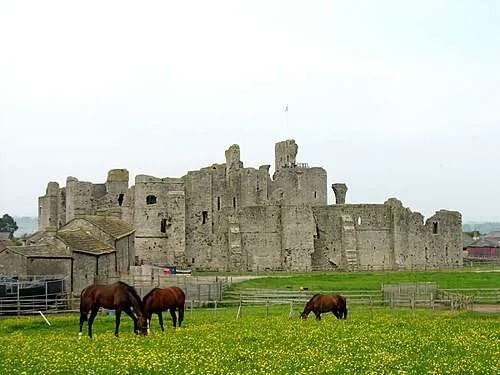
In 1934, too, the Society instigated the installation of a memorial window to King Richard and his family in the church at Middleham.
Richard had lived at Middleham Castle with his wife, Anne Neville and only (legitimate) son, Edward of Middleham while ruling the North. Within a year of Richard’s accession to the throne, his son died (April 1484) and Queen Anne a year later (March 1485).
The Daughter of Time
 The surge of interest in Richard in the 1950s was undoubtedly fuelled to some extent by The Daughter of Time, an untraditional detective story by well-respected mystery author Josephine Tey, published in 1951. Her detective, Inspector Alan Grant, is confined to a hospital bed after an accident. He rejects most of the books his visitors bring. But an imaginative friend brings him a collection of pictures of faces and he is intrigued by one. He thinks the features are at variance with the sitter’s reputation. This is no murderer! Mysterious Richard III strikes again.
Josephine Tey was one of the pen names of the highly oriiginal writer, Elizabeth (Beth) Mackintosh, already a successful playwright under the pen name Gordon Daviot.

She had earlier written a play about Richard (called Dickon). B In 1990 the Crime Writers’ Association voted it the greatest crime novel of all time.

The Richard III Society

Partly as a result of the success of The Daughter of Time, interest in Richard intensified in the 1950s.
The Society’s home page also links this increasing interest to Ohio University’s Professor Paul Murray Kendall’s 1955 biography, defending Richard’s case as the rightful heir to Edward IV and aiming to acquit him of usurpation.
A third boost to Richard awareness came from Laurence Olivier’s 1995 movie, of the Shakespeare play, cut and edited to fit movie theatre times, with Olivier speaking the soliloquies, straight to camera. He skewered the audience with his powerful malevolence. The scene where he rounds ferociously on a small prince who teases him about his hunch back is still genuinely frightening.
 Interest in Richard grew to such an extent that by 1959, the membership of the Society of the White Boar had increased tremendously, and it changed its name to The Richard III Society. It now has over a thousand members, many international. They have been active In recent years, not least in the discovery and subsequent reburial of the bones of Richard III in Leicester.
The Lost King by Society member Philippa Langley and Michael Jones described the agonisingly long and bureaucratic process which lurched from crisis to cliffhanger for years, before the goal was achieved.
Shakespeare and Richard III

Shakespeare did more than a hatchet job setting Richard up as a royal Machiavelli and self-professed murderer with some of the most quotable bits of villainy ever heard on stage. Some of my friends say Richard III is a vile play and refuse to see it a second time. Some say it’s brilliant.
My late actor friend Stephen Jenn pointed out that it was full of fantastic parts. “Cursing queens,” he said wistfully. “Bags of lying and seduction. And yet you can still make the audience love you.”
Well, not all the audience. See friends who won’t go back, above.
And the villain is a truly compelling character, larger than life and can be equally horrifying and attractive.
… and Me

I discovered this young, seeing The Wars of the Roses project by John Barton. He took the three parts of Henry VI and carved them up by King, as it were, Henry VI, Edward IV, leading to Richard III. The scene I remember is actually from the test of Henry Part 3. The actor is Ian Holm. And I am in a fussy Edwardian London theatre (The Aldwych) with a schoolfriend.
On the stage Edward and Elizabeth Woodville are prowling round each other, commented on by Edward’s two cynical brothers, Richard and George, Duke of Clarence. (Think the Montague lads in Romeo and Juliet.) The bargain is struck, the court wanders off, leaving Richard alone on the stage. And he tells us just how awful he is, how wicked. He gets wilder and wilder, then downright surreal. He hates himself…. he drops his face in his hands….

By this time the whole audience is leaning forward, feeling his pain. And Ian Holm looks up with the sunniest, most innocent of smiles. He says cheerily, “Can I do this, and cannot get a crown?”
Gasp!
He has not only taken in the court and the common people. He’s lured us into believing him too.
A true coup de théatre. All these years later, I can still hear that charming, mischievous voice. It sends chills up my spine.
Richard III, My Memories and the Mystery

The reason that I’ve been niggling away at this is that I’ve just returned from a brief holiday touring Wars of the Roses sites run by Andante holidays. They call it Richard III, Hero or Villain? That is very fair. We went to battlefields. (I had a distinctly creepy reaction to the innocent field that once probably saw the Battle of Bosworth.) We went to the brilliant Battlefield Centre on Ambion Hill and the impressive King Richard III Visitor Centre in Leicester.
It was in the Visitor Centre that I learned Richard was the first king to require laws to be written in English, so that the governed could understand them. Practical and reasonable administator, then. And rather a nice man, too, from some of the other notes and exhibits. What’s more, there is a facsimile skeleton where you can see the blows that killed him, and those that didn’t. (Andante will be doing the tour again next year.)


Above all we got to know the warring families: not just York and Lancaster but Nevilles — head honcho Warwick, the King Maker — the Stanleys, the Percys, the ambitious Woodvilles. By the end, I sort of understood the multi-layered grievances and loyalties. “Not so much a battle, more a Mafia hit,” someone said of one particular encounter.
But the jury was still out on villain or hero. And even after a week’s worth of reading and remembering, I’m still not sure. The only thing in Shakespeare’s Richard III to which I’m prepared to give credence to is “A horse, a horse. My kingdom for a horse.”
But Richard the man? Still a mystery.

Sophie
PS Nevertheless, just in case you want to see the wicked mischievous pyschopath that Ian Holm made of Shakespeare’s R3, here’s the link to the BBC TV version on Youtube.
It doesn’t make sense that Richard would murder his nephews. His own son died, his wife died, and he is getting old to remarry and father an heir. Why not leave the boys safely in the Tower, possibly adopt or have Edward declared his heir despite legitimacy questions.
I tend to agree with you Kathy. Since the princes had been declared illegitimate, Richard had no need to kill them to get the crown. But Henry VII did need them dead because his own claim (apart from winning at Bosworth) was thin. He’d decided to marry the remaining child of Edward IV, Elizabeth of York, to help secure the throne. That effectively made her legitimate. And if her, why not the boys? But if the boys had lived, they’d have been alternative and better claimants. And Henry VII was NOT a nice man. (His mother was a piece of work, too.)
In addition to the Josephine Tey book, there is also The Sunne in Splendour, by Sharon Penman which gives a longer view on Richard. I recommend it.
And I should record that I’m one of those who will not go to the Richard III play again. Saw it in Stratford, with Alan Howard as Richard, and it was dark and vile and I hated it. (Yes, Howard was brilliant but still hateful.) I have also seen the Olivier film. Those two together are quite enough anti-Richard stuff for me.
I don’t remember Alan Howard, I’m afraid. Think I probably missed that.
I saw Anthony Sher’s famous performance, a real bottled spider, and it was a fanstic physical achievement but he was so unremittingly bitter, it just made me recoil. I don’t think I’ve seen the play since, though I can remember an awful lot of it, for some reason. A friend of mine was in it at university, so maybe it’s got something to do with hearing her lines!
I’d seen Alan Howard as Prince Hal in Henry IV and V in London (possibly Old Vic? can’t remember) and he was astonishingly good. So it seemed a no-brainer to go to see him in R3. Mistake! That calibre of actor can make you love him or hate him. And when he was R3, I hated him.
I really hope you’re right, Kathy. The trouble is that the boys could be used as pawns by the Woodville clan (they had been brought up under the care of their uncle Anthony, Earl Rivers at, I think Ludlow) and possibly others. And Richard was not yet 33 when he died and there seem to have already been approaches for him to marry a Portuguese princess or even a Spanish one.
Enjoyed the blog, Sophie. For me the first interest in Richard III came when reading Daughter of Time when I was a teen. Didn’t know a lot about English royalty then, and am not that interested in them now. (I’m not English) But the mystery, the examination of the various historical sources — that fascinated me. And certainly contributed to my love of history.
Thanks for the link ti the video, too. Wonderful.
Yes, that was how I came to R3 too. It really was a detective novel in the best sense of the word, wasn’t it?
So glad you enjoyed the video. One of the great experiences of my life was, a keen teen, I went to all three plays in one day at Stratford. I even stood for the first two, renamed Henry VI and Edward IV. My parents bought me a seat for the Richard III, which I was very disgruntled about to begin with but by the time came around hugely grateful for. I started the day stage struck and came out a history buff. Truly transformative.
This portion of history wasn’t covered by my school – it always was, and still is, to glorify the Tudors – but then I read The Daughter of Time and Richard became a person. Loved the blog, Sophie, and will try to find the time to read The Sunne in Splendour, Joanna.
So glad you enjoyed it, Liz.