One of the things that struck me on recent visits to museums in Crete and Santorini was the sheer amount of gold and jewellery on display. Much of it dated from millennia ago. And the workmanship was often exquisite, as you can see.
necklaces 1400-1300 BC from Archanes, Crete
Made me think about what that means in practice.
Imagine goldsmiths working in Crete in 1500 or 2000 BC. They would be working with the relatively soft Bronze-Age tools—no acetylene torches for them; no hard steel implements, because smelting of iron didn’t start till around 1300-1200 BC—and with only experience and handed-down skills to guide them in their manipulation of metal and fire. Continue reading →
Spinalonga is a tiny island off Crete, next to a much larger peninsula, also (confusingly) called Spinalonga. It (the little island) was one of the really interesting places we visited on my recent trip to Greece. It was a beautiful day when we went there, as you can see from the image below, taken from the boat.
The island has a long history and was strategically important during the wars between the Venetian and Ottoman Empires. The Seventh (and last) of the Ottoman Venetian Wars was in 1714-1718. That was when Venice finally lost Spinalonga to the Ottoman Empire.
Strategic importance?
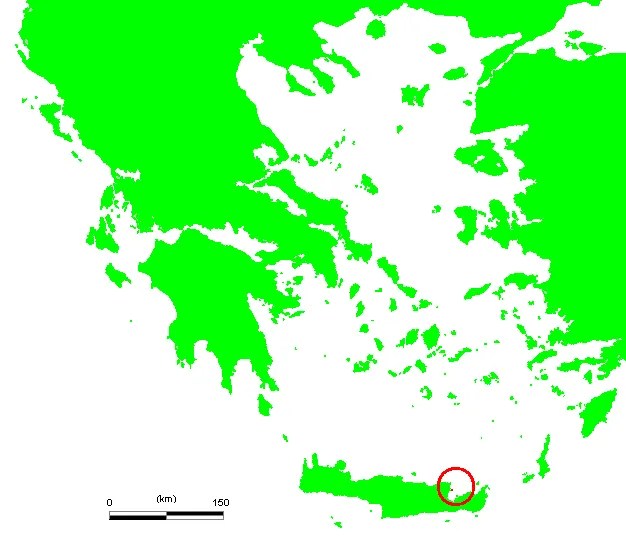
This is where Spinalonga lies (circled in red on north-east of Crete in this map of Greece and the Adriatic):
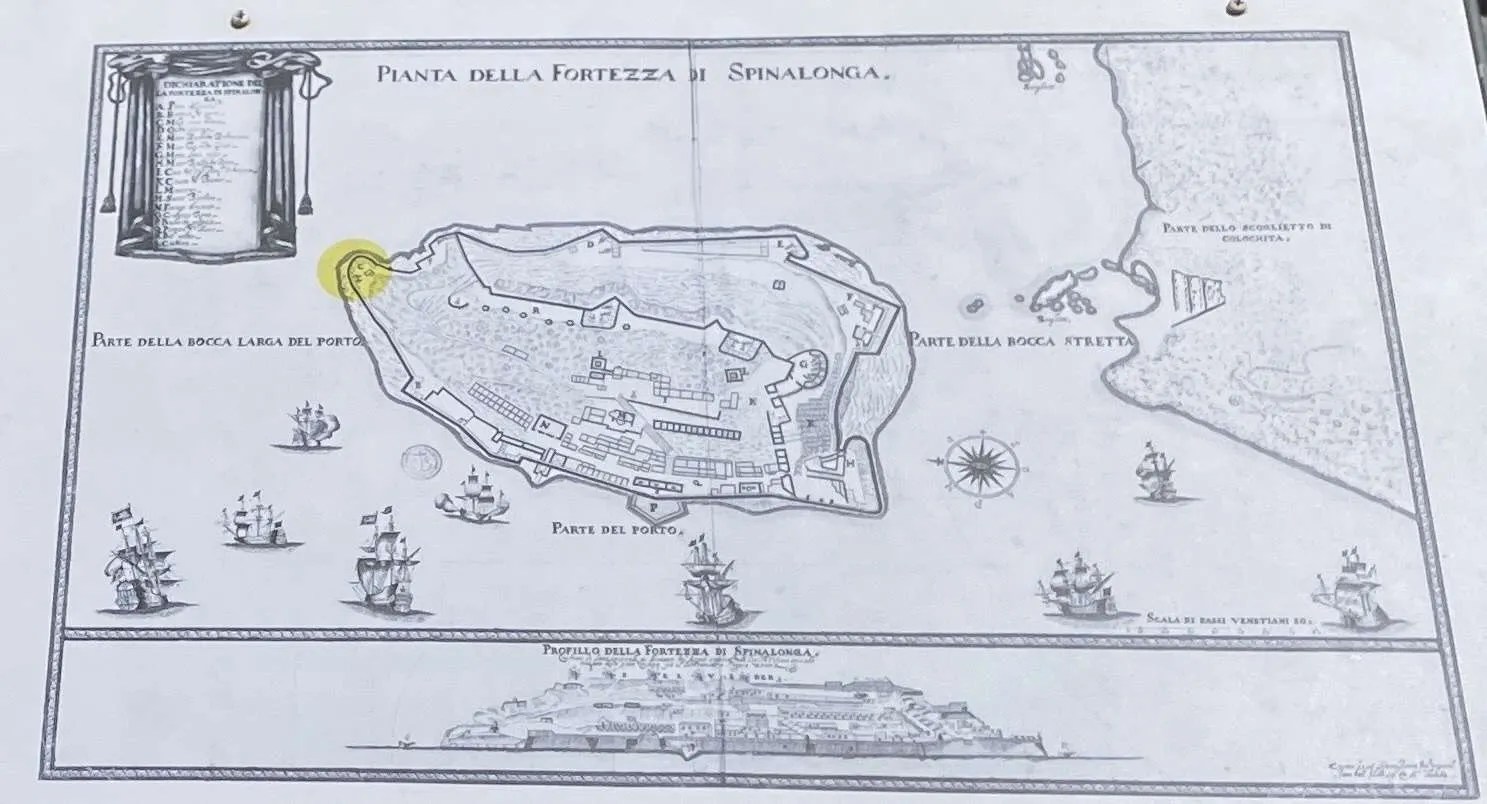
The island was part of Venice’s extensive fortifications against the Ottoman Empire. They acquired Crete after the Fourth Crusade in 1204. They began fortifying Spinalonga in 1578, with blockhouses at the highest points and a ring of fortifications. This map shows their work.
One of the huge bastions (highlighted yellow in the early Venetian map above) is named after Luca Michiel, the engineer who planned it in 1579. It has seven cannon ports. The half-moon-shaped (mezzaluna) Bastion Michiel is still impressive, both from the landward side and from the sea. Definitely not the place to attempt a hostile landing.