Tag Archives: Lord Byron

Romance Has Good News

Sophie is sensing good vibrations for the romance genre! 

spray of lily of the valley lying ona hand-written love letter

Image by beasternchen from Pixabay

At last, some good news for the romance genre. As regular readers of this blog will know, the Libertà hive is well and truly in romantic fiction’s corner. We have all written it, love reading it and in general think it adds to the gaiety of nations and the wellbeing of our lovely readers.

And we get seriously annoyed when the genre is denigrated. And yes, it has been, far too often.

ByronJean-Baptiste-Mauzaisse-CC0-via-Wikimedia-Commons-scaled.jpg

For that, I think Lord Byron has to carry the can a good long way.  “Love to a man is a thing apart, tis woman’s whole existence,“ forsooth!

The man was just a Bad Picker. Then he blamed everyone but himself when his own love affairs got heavy.

Some of the worst offenders have been commentators with similar Byronic hang-ups, in my view. And no, not all of them were men. Some of them, I suspect, were trying to impress a certain sort of masculine culture with their high intellect and low emotional reactivity. Sigh. Continue reading →

Catherine Gordon Byron – a bad mother, or Gothic heroine?


Mrs Catherine Gordon Byron, Thomas Stewardson, Public domain, via Wikimedia Commons

Earlier this year I wrote about the Romantic poet and favourite bad boy, Lord Byron.  In that blog, I mentioned his wild family but concentrated on his father’s side. They were all, well, shall we say wild and wayward. Now it’s time to redress the balance.

I want to talk about his mother, Catherine Gordon Byron, who has at least some of the hallmarks of a Gothic heroine. Let’s start with her ancestors.

The distaff side

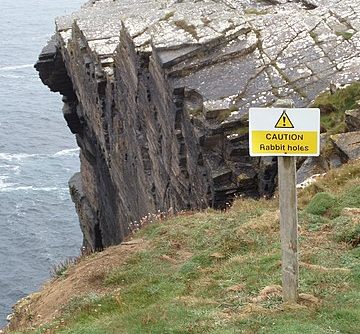
Rabbit hole warning

Gaius Cornelius, Warning rabbit hole CC BY-SA 4.0, via Wikimedia Commons


Not a term we hear a great deal about, these days, unless you work in the textile industry, so here’s a bit  more information.

WARNING, A RABBIT HOLE! Continue reading →

Lord Byron, the Heyer Walk and Lady Caroline Lamb

Byron c 1813 by Thos Phillips

Byron c 1813 by Thos Phillips

As promised in Sarah’s Byron blog last week, this is Sophie’s take on Byron. Enjoy.

When I studied the Romantic poets in my university English Literature course, Lord Byron was the odd man out. His sensibilities, not to mention his gravitas, didn’t seem in the same class as Wordsworth’s, Keats’s or my beloved Shelley’s.

At that time, I thought that was because of his character and advantages of birth—an aristocrat, an arrogant bad boy, a traveller with a taste for the fleshpots. He was, well, a bit raffish, with a brisk way of discarding emotional attachments. It showed in his poetry. I didn’t like him very much. And I don’t think many of my tutors did either.

The Grand Sophy paperback coverIn Georgette Heyer terms, he was more Sir Montagu Revesby than Augustus Fawnhope.

Or so I thought.

Georgette Heyer Walk

Then, some years ago now, a group of friends and fellow Georgette Heyer Fans were coming to London.

Berry Brothers & Rudd, St James's

Berry Bros & Rudd, St James’s
Philafrenzy Own work CC BY-SA 4.0, Link

To amuse them, I put together a walk round some of the places in Mayfair that she mentions in her Regency novels. (More details in this blog on the wonderful Word Wenches site.)

Lord Byron cropped up no fewer than three times en route. I wasn’t expecting it and, as he only gets a couple of name checks in the Heyer canon, I often leave him out on the Walk itself. But they all told me something about him that surprised me. Continue reading →

Lord Byron : what I didn’t know about the man

A few years back I took part in an event at this venue –

Rochdale Town Hall 1909 AnonymousUnknown author, Public domain, via Wikimedia Commons

Okay, not quite that long, perhaps. This is a postcard of Rochdale Town Hall from 1909 and I was there in 2012. However the building is still as impressive as it was at the turn of the 20th century. It has recently undergone a massive restoration project and is well worth a visit, if you are ever in the area.

So why was I there?

I was taking part in a celebration for this man on his 224th birthday.

ByronJean-Baptiste-Mauzaisse-CC0-via-Wikimedia-Commons-scaled.jpg

It’s Byron. Of course. He was 6th Baron Byron of Rochdale, in case you were wondering about the connection. Continue reading →

Superstitious? Who me? Nah (touch wood)

Botswana, fish eagle in bare tree ©JoannaMaitland2019Earlier on this week, I caught myself saying “Touch wood” and started to wonder where the expression came from. Was it me being superstitious? Or was it just a cultural thing, like saying “Bless you” when someone sneezes, or “Goodbye” (= God be with you) when we leave them?

As is the way of such things, it started me down a whole warren of research rabbit holes. What’s not to like? At least for a blogger like me, rooting around for something to write about.

Where does “touch wood” come from?

I assumed that “touch wood” must be ancient, perhaps dating from pre-Christian times when sacred groves of trees were venerated.

Shades of the wonderful Asterix and his Druid, Getafix. (That’s a classic example of the humour of Asterix’s brilliant English translators, Anthea Bell and Derek Hockridge. The original French name was Panoramix which isn’t nearly as clever, I don’t think.)

According to Wikipedia, I was sort of right about the Celtic history of touching wood (or knocking on wood) as a kind of protective magic to turn away misfortune. The proper term is, apparently, apotropaic. (No, me neither.) However, there’s a later Christian explanation, relating to the wood of the cross. And an even more modern derivation, from a game of tag called “Tiggy Touchwood”.

Personally, I prefer to stick with the Celtic origin theory. “Touch wood” or “Knock on wood” seems to be in common use in loads of countries which might suggest that it is very old.

I rest my case 😉

Superstitious, moi?

Continue reading →

Genre Romance – Respect Romantic Fiction

Image from Pixabay f.richter64@gmx.de

Tweets urging us to respect romantic fiction have been appearing daily in my Twitter feed this week. There is even a new Twitter hashtag: #RespectRomFic.

After the events set out in my last blog, the Romantic Novelists’ Association wrote an open letter to the Sunday Times. It pointed out the significance of romantic fiction to UK publishing. It also took them to task about the paper’s neglect and, indeed, apparent ignorance of the genre.

There has been considerable follow up. Best seller Milly Johnson had an article in The Bookseller. To their credit, The Bookseller reached out, as the phrase goes, and commissioned it.

The RNA sought the views of three of our members who have hit the Sunday Times best seller list: Milly Johnson, Philippa Ashley and Heidi Swain. The blog, called Love in the Time of Snobbery, went up yesterday (Saturday 18th December). Continue reading →

A Dog : A Writer’s Best Friend?

The Dog in Fiction

Dogs are very popular with writers. Think of fictitious ones like Heyer’s Italian Greyhound, Tina, in The Grand Sophy, Bulls Eye the fighting dog belonging to Bill Sykes in Dickens’s Oliver Twist and Timmy, the fifth member of Blyton’s Famous Five. Even Conan Doyle’s “gigantic hound”. We love them all.

image of Italian greyhound but not Heyer's Tina

Not quite Heyer’s Tina

The Dog in Sarah’s Life — Willow

Many writers have dogs of their own (some, like Liberta’s very own Sophie, have cats, but that, as they say, is another story). I must hold up my hand. I have a dog.

Sarah Mallory and her dog Willow

Sarah with her faithful friend

First things first, let’s get something straight. Willow is a dog. Yes, yes, I hear you say, we can see that.

He is a male dog. He looks so elegant, even pretty, and being called Willow, it is no wonder that many people think he is a girl.

We adopted Willow as a rescue dog when he was just over three years old. We thought it would be better to keep his name than change it to something more, er, butch, such as Bouncer or Max.

Adopting Willow was one of those serendipity moments that happen, sometimes. Continue reading →