Tag Archives: writing tips

Assumptions Versus Story Telling

Sophie ponders various assumptions that she has had to negotiate in her writing life, including her own

Image by Pexels from Pixabay

This week I’ve been weighing up the problems caused by assumptions verses story telling.

I stumbled over this dichotomy in my very first unpublished story, long before I thought of myself as a storyteller. Then, when it came to showing my first attempt at a publishable ms, l had exactly the same experience. Both times shocked me. Made me re-evaluate my approach, too.

It’s happened a couple of times times since, and now it’s happening again, and I’ve taken a step back to think about it. Continue reading →

Writing too long leads to the dilemma of cutting down to size

Joanna’s tortured musings on Cutting Down a Manuscript PLUS NEW TIPS

A few years ago, I was faced with a MS that was much too long. It needed cutting down to size. So I wrote a blog with my tips for doing it.

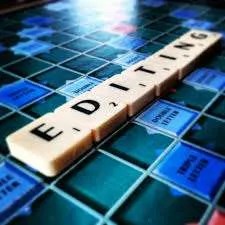
editing in Scrabble tilesLast time, the MS had swollen to over 94,000 words. I needed it to be well under 90K. I actually got it down to 82K, by following my own hints and tips. Then I submitted it to the editor who’d asked for it. Unfortunately for the length problem, I then had to make changes to take account of said editor’s (very perspicacious) comments and it swelled to—would you believe?—94,000 words again. Disaster on the length front, though the MS was a lot better for the editor’s input.

Impossible to resubmit the MS at that length. So chagrined author had to go back to ruthless application of the strategy for cutting down. Continue reading →

Reading My Book Aloud

Writer in Control no longerFor the last two days I have been reading my draft novel aloud. It was not at all what I intended when I planned this week’s work. But I realised just yesterday that it might be a good idea.

So what happened yesterday? Well I went to Oxford to have lunch with two writer friends. That meant about an hour on the train. It’s not long enough to open my laptop and continue with editing my present ms. So I thought I would take a casual look at an ancestor draft.

e-reader stop micro-editingThis was more out of curiosity than anything else. I have been writing this book for some years now, as regular readers of this blog will probably have guessed.

I settled into my seat, opened my Kindle and began to read, as if it were a book by somebody else. It worked like a dream. Continue reading →

Cutting while keeping your voice? Tips and trials

long line of duplicated bollards; need cutting?I’m currently finishing a first draft. And it’s too long. Much too long. It needs lots of cutting.

And therein lies a dilemma.

My first draft is definitely my voice, with all its good and bad points. One of my bad points is repetition. Duplication. Saying the same thing over and over again, but in different words.

ball and chain labelled sin; the sin needs cuttingDid you notice what I did there?
Yes, bad point number one to the fore.
Also in the first para of this post (sigh).

Problem is that, if ⁄ when I start cutting out the sin of duplication, I also risk changing the authorial voice so that it isn’t mine any more.

Oh dear.

Cutting habit words?

I can, of course, make cuts by removing my habit words and phrases.
Of which of course is one. I blogged about that a while ago. old habits to newBut, to be honest, removing habit words doesn’t reduce the overall word count by much. And I need to cut thousands of the blighters. So something more drastic is required. Continue reading →

A Happy New Year, or is it? Kill the doomscrolling

La Dolce VitaI don’t usually make resolutions, but this New Year I have. And it’s one I need to keep if I am to enjoy the next twelve months.

The problem is I am spending far too much time worrying about the State of the World. I cannot stop looking at the news, online articles and other people’s (often ill-informed) opinions. I have even been waking up in the early hours and switching on my phone, to see if I have missed something of vital importance. Which I haven’t, of course.

Apparently, this is Doomscrolling

woman surrounded by social media icons, doomscrolling

Image by Gerd Altmann from Pixabay

Endlessly scrolling through your phone or laptop for bad news and overdosing on negativity. I have discovered plenty of information from scientists and medical experts about this phenomenon online. It’s not new, but became much more prevalent in 2020.

So it’s not just me, then Continue reading →

Anachronisms and pesky unknown unknowns to puzzle us

key on keyboard labelled Oops! for mistakeWriters of historicals are always on the lookout for anachronisms. They still trip us up, time and again. But the real elephant traps are the unknown unknowns [© D Rumsfeld?], the things we don’t know we don’t know—and, as a result, we don’t know we’re getting wrong.

I was prompted to write this blog by some of the reactions to my post about habit words, a couple of weeks ago. woman with clock, pointing finger at headSo this week’s post is about anachronisms of various kinds.

Anachronisms? The standard definition is something out of its time—an object, an expression, an attitude—something that does not belong in the period of the story.

We wouldn’t put electric light in a Regency setting, for example. That one is easy to spot. But how am I, as a historical writer, supposed to spot the ones that lurk in the undergrowth of my ignorance? Continue reading →

Habit Words : Use, Abuse, Remedies

snoopy at pink typewriterDo you use habit words in your writing?

I bet you do. Perhaps all authors do? A few weeks ago, in her excellent presentation on snappy dialogue at the RNA Virtual Conference 2020, Virginia Heath confessed to overusing the phrase “he huffed out” as a speech tag for her heroes. Virginia, being a professional, knows how to catch and reduce her use of habit words. Do you?

To start at the beginning: what are Habit Words?

yellow bollards, repetition concept

Repetition can be boring. And people do notice…

Habit words and phrases are part of an author’s voice, the words and phrases that come naturally and automatically, that trip off the tongue, that make the writing sound like you. Continue reading →

Scribbler’s Progress: Learning from Fellow Writers

writer's tools for scribbler's progressTrying to write during lockdown has set me pondering my Scribbler’s Progress.

I have learned a lot about writing over the years. Some came from experience; also, an occasional discovery of my own. But a lot was quite simply from reading great books or discussing with and listening to other writers.

Remembering has been a pleasure – and salutary for my next project. So I thought I would share, in case some of this might help someone else.

Scribbler’s Progress Milestone 1

@sophiewestonbks in IrelandI wrote stories very happily as long as I could remember. It was a nasty shock, therefore, when I found myself living half way up a cliff in Country Kerry re-writing the same scene for SIX WEEKS until I ran out of time and money.

So I cobbled something together and sent the thing off to publishers. They all  turned it down. I heaved a sigh of relief and haven’t looked at it again.

But the experience shook me. Maybe I wasn’t a writer after all? Until I vaguely remembered something I’d read… Continue reading →

Filing to keep your WIP safe : writing craft

woman against background of question marksA few weeks ago, I read Elizabeth Hawksley’s blog about the difficulties she had when first trying to turn one of her backlist into an ebook. She’d been filing her old manuscripts in chapters that she thought she could use. But the files turned out to include competing versions. She had real problems stitching together a continuous MS.

Elizabeth, you had all my sympathy.
Been there, done that.
Don’t have the t-shirt but probably should. Continue reading →