
Sophie reads a cosy paranormal and starts to ponder what makes a book cosy and how that might usefully apply to other genres
 This week I have woken up, clearly rather late, to discover that there are several emerging cosy genres in popular fiction. It all started because I had discovered a non-traditional fantasy and loved it. I mentioned it on a Zoom chat with writer friends.
“Ah,” said Liz Fielding, “my fellow crime writer E A Mayes covered that in an interesting Substack post this week. I think she may even have mentioned that particular book.”
Liz sent me the link. E A Mayes did and she had indeed been talking about my newest Keeper novel, Legends and Lattes by Travis Baldree.
 The essay is a great read, fascinating and infectiously enthusiastic. It gave me some terrific new titles for my Wish List.
And it set me thinking. How did the Cosy tag arrive?
What does it signal to the alert reader? Or, for that matter, to the anxious writer, panting to keep up.
COSY CRIME AND OTHER GENRES: MEANING?
I’ve reverted to the UK spellling here, because that’s what comes naturally to me. Publishers, reviewers and booksellers seem to stick with the US spelling of cozy, however.

The Oxford English Dictionary’s first definition is “giving a feeling of comfort, warmth, and relaxation: the flickering lamp gave the room a cosy lived-in air.” Its second offering is “(of a relationship or conversation) intimate and relaxed: a very cosy little chat.”
To me “cosy” has always had distinct associations of snuggle up and stop worrying. It’s a word I love.
 As so often happens, the definition comes with a less amiable application, however. According to the OED “cosy” can be used to indicate unchallenging, too easy, or complacent – especially when applied to assumptions. It can even become positively derogatory “A cosy relationship” in business or politics is usually one to get investigators sniffing the air for hidden deals. “Possibly somewhat corrupt,” says the OED primly.
COSY CRIME – the term
 To my astonishment, the OED’s last definiton is actually “denoting or relating to a genre of crime fiction characterized by a lack of violence or explicit sexuality, and often featuring amateur detectives: the cosy crime story is about a group of elderly friends solving mysteries from their retirement village | for those who can’t stomach the reality of true crime, cosy fiction is having a moment.
NB The words in italics are quotations of someone else, not the OED Editors, pontificating on the genre.
 I can’t find anyone claiming to have coined the term Cosy Crime. But I hadn’t heard it until my dear friend, the late Lesley Cookman, fulminated about it about fifteen years ago. She thought it made her Libby Sarjeant books – deeply grounded in her beloved East Kent and acutely sensitive to its history, local housing and other issues – sound perfunctory and two dimensional guess-the-villain games. (They are the reverse.)
COSY CRIME – the books
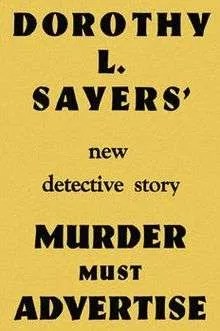 The Wikipedia entry for “Cozy Mystery” says that the term became current in the late 20th century and originally indicated books that were deliberately written in the style of “the golden age” of crime fiction.
While this may once have been true, I don’t find much Ngaio Marsh, Agatha Christie or Dorothy L Sayers in, for instance, Richard Osman’s blockbusting cozies.
Perhaps it held true only for the time when writers were trying to break away from horror crime. SIlence of the Lambs, anyone? The title alone still makes me shiver.
For a few years, I stopped reading mysteries altogether, except for a few old favourites. That was precisely because of so-called “psychological” plotting. “Nothing that will give me nightmares,” I told my local bookseller back then. He led me gently away from the crime section.
COSY CRIME CRITERIA
 One of Wikipedia’s sources, sets out the criteria for a cosy crime: apart from no sex, swearing or blood on the page, the detective is an amateur — otherwise the novel would leap out of Cozies into the Police Procedural drawer, I suppose — but on good terms with local law enforcement.
No serial killers need apply.

Cosies generally come in a series, with continuing characters and frequently a strong sense of place. And then there are often other charming recurring elements from cats to cookery, to quilting and beyond. The reader is quietly enfolded into a familiar group; silent perhaps, but a member by virtue of caring,
Above all, this seems to me to be the key point about “cosy” as a genre definition of genre, this sense of community.
Possibly it represents a lost Paradise, in our real lives.

Twenty years ago, I remember a depressingly well-reasoned rant in The Guardian. It concluded that “community” was, at best verbal sticking plaster, at worst “lethal”.
At that time, my own experience seemed to mirror that of journalist Peter Preston. I was a member of a couple of groups who worked hard for a larger community objectives. It was fun. But it was limited to Writing, Reading or Scottish Dancing. When it came to the big stuff, you were on your own.
Since then I think that some of us had a taste of real community during Lockdown. But that has largely fallen away under economic and other pressures.
Maybe we want it back. Long for it, indeed.
COSY PARANORMAL?
 Well, it was a Cosy Paranormal that started me off on this quest. I picked it up because the blurb intrigued me. I bought it because I liked the sound of the large clumsy heroine. (She’s an orc. She’s supposed to be large and clumsy.) And it was an absolute delight.
Apparently it was a sensation on Booktok and Instagram. They were not wrong. It is very special. In this case you see her leaving a community of sorts and setting out on her own. It’s sort of a hero’s journey, except that she does it entirely on her own. There’s no mentor. And she builds a new life for herself, which is virtually impossible to talk about without giving away spoilers. So read it. You won’t regret it.
 E A Mayes says that Cosy Paranormals have been going strong since the 19990s. But I recall The Unlikely Ones, a wonderful adventure by Mary Brown, first published in (I think) 1986.
It has everything: magic, a fellowship of wonderful characters, weak, fallible and incredibly lovable, and a marvellously kind protagonist. They limp along together on their great adventure, never believing that they can succeed. Though they do all, interestingly, seem to trust someone else in the company.
A wonderful community. Gorgeously written, too.
COSY OTHER GENRES?
 In romantic fiction, we had an outbreak of cosy cupcake cafés a while ago. Goodreads actually produced a list of nearly 300 books which had images of cupcakes on the cover. This was followed by a flush of bookshops as settings. Both seemed to aim at bringing the romantic pair into a community setting.
My first reaction was that there’s an intrinsic mismatch between a community and the eyeball to eyeball drama of two lovers. At least, there always has been. But I suspect that the Internet Dating Apps, with their frequent and widely Facebook-discussed disasters, may have turned what used to be a rather private journey into a full-on shared experience.
 Now I hear rumours of Cosy Horror, too. I’m sure that can be done. Consider a community where you know and trust everyone but someone is not what he seems? Oh Yeah!
The only one I’m not sure would stand up is Cosy Literary Fiction. It was PD James, I think, who said that crime fiction was ultimately satisfying because it was about justice. Literary Fiction is not about anything in that sense. It is, it seems to me, a state of mind, both of writer and reader. Wonderful books may and do emerge from that state of mind. But it is not reader-focused. The Cosiness of the Long Distance Runner? I don’t think so.
Whereas the whole point of cosy genres, it seems to me, is to make the reader feel comfortable, ultimately satisfied and included.
ONE LAST COSY THOUGHT
 It occurred to me when I was rereading this blog, that in reporting the OED entry, I had concentrated entirely on the adjective and its attendant verb. But cosy is, of course, also a noun. In fact that noun could be an emblem for all the various genres that might have cosy variants.
The humble tea cosy.

It has a long tradition. It can display immensely creative decorative flourishes. It was often a gift between women, knitted or crocheted or handsewn and stuffed like Napoleon’s hat. As a result, it has been much prized and even loved by both giver and receiver. And it benefits everyone who has a cup of tea!
When every spoonful of tea counted on the family budget, you had to keep the pot warm, so that it could be topped up from the kettle after the first (and sometimes even second) pouring. I remember an elderly friend of my parents passing over a drink the colour of dark mud and saying comfortably, “It’s strong now, but the next cup will be gentler.” So not only it is flexible, the tea cosy increases the pot’s capacity to deliver.
So here are the cosy qualities in one object — straightforward, accessible, friendly, practical. It doesn’t need to be showy but it does have to get the job done. It is warming. It makes you smile.
And it’s exactly the welcome a community of readers needs to see when they get together!

 Sophie
Fascinating blog, Sophie, thank you. Shall deffo seek out Legends and Lattes from your recommendation. Somehow I’d missed that one.
Your blog made me wonder, not for the first time, whether the Vampire Sleuths series I’m currently writing will count as cosy/cozy. Cozy Vampires, maybe? It has some of the ingredients, but it’s mostly not small town stuff, although part of it is set in Little Piddling. (Those who have read the Beach Hut Surprise anthology may recognise the location? And also my vampire hero, Theo.) OTOH, the series doesn’t have much gore — my vampires are old enough not to be obsessed with blood and sex which seems to be the clichéd expectation from vampire stories — and it does have amateur detectives. And romance, too. What do you and others think? Advice welcome, since I’m planning to launch the series soon.
Well, as you know, I loved Theo in his novella in Beach Hut Surprise. I think he certainly deserves the Cosy Vampire description. He’s an absolute sweetheart.
He’s not small town cosy– too cool for that, not to mentioned those hundreds of years of worldly experience. And in the novella he felt like a bit of a loner. But he does seem to be building a bit of a community of mutual support in your series.
There’s much love for Theo here, Joanna and there’s an intimacy in the setting – despite Paris! – that very much indicates the cozy/cosy end of the genre.
Interesting, I have wondered about the “cozy” label, especially regarding fantasy. Thank you for explaining and for book recommendation. I have The Unlikely Ones on my shelf and it is very good.
Well, this is just my take on the label, Kathy. Other people may not agree.
So glad that you enjoy The Unlikely Ones, too. It has survived many, many culls of my fiction shelves and now has a permanent place. Every time I pick it up, I find something warm and wonderful in it.
Thank you for this blog, Sophie. And for two new titles I will be hunting down. Your description of the books as inclusive really chimes with me. They are settings the reader can relate to. People they might know.