
Pantser Sophie wrestles plot. Plot shifts ground. Pantser Sophie regroups…

As long as I’ve been a writer (i.e. since I was about seven) I have struggled with plot. It was the very first thing the agent who took me on as a wannabe novelist said to me. It was the first thing that my last (so far) editor said, too.
In the umpty-um years between, I’ve been to conferences and taken notes about plotting. There were courses I attended, writing gurus I followed, even plot templates I hammered my story into matching. Save the Cat, though inspiring in many ways, has much to answer for.
Alas, messy thinking is clearly hard-wired.
Pantser, Romancer?

Diana Avebury (treasured first agent, no longer with us) was tolerant but practical.
“Writers are either planners or pantsers,” she said. “You can’t change what you are. And the pantsers might have something special. They know they’re on a magic carpet ride from the start. Planners — like Agatha Christie, for instance — not so much. But it does limit you.”
Diana was mainly interested in crime fiction. She steered me towards Harlequin Mills and Boon, saying I wouldn’t cut the mustard in the plot-heavy crime genre. I, of course, didn’t like the idea of being limited and never stopped trying to beat the barrier. Just because it was there, really.

The Magic Carpet ride was brilliant for writing romantic fiction, though, which is what I mostly did.
And still do, when the mood is on me. Reading romance novels has certainly got me through a couple of very bad spots in my life, as well as being a lot of fun generally. I still re-read the genre with pleasure, including many of my own, to my surprise. I’d forgotten so much about them!
I aim to republish in e-book form favourites whose titles have reverted. Some can do with a bit of revision, of course. Haunted by a Touch, thanks to its inspired editor, needed hardly any at all (though I did change the title from A Stranger’s Touch because the hero wasn’t a stranger).
Pantser Plotting 101

Jacqui Bianchi, the inspired and inspiring editor in question, whom regular readers of this blog will have heard of many times, took me in hand at just the moment when even romance Editors were becoming a bit more plot-alert.
“Emotional conflict is fine,” she said. “Your hero is as important as your heroine and heroes don’t stare in the mirror and run what-if scenarios. They do stuff.”
Righty-ho. I could manage a hero doing stuff. But then stuff has consequences and — oh, whoops, that’s meaningful action and needs a reaction from heroine or similar. Now I haven’t got enough wordage left for my beloved internal conflict from any character at all.

It took Jacqui three books before she called to say she’d read the ms. I had the notebook and pen to hand, ready for her general outline of the changes she wanted. I knew the details would follow in one of her witty, appreciative and occasionally hard-hitting letters.
“And?” I said.
“I’m sending it to Acquistions.”
“Um.” Self rapidly reruns her words through the brain filter. Then again, slowly. Silence on the other end of the line. Maybe a muffled gurgle, but it could have been a radiator. Still not sure I’ve heard right. “Er — really? No changes?”
“Nope. You’ve got the plot. At last.” Burst of evil laughter.
Well, I said she was inspiring. I never said she didn’t have a mean streak.
Pantser Plotting … Into the Void

Jacqui was right. The tale had a really big back story, three years in the past for my characters and their romantic conflict, and I had delivered it in a real-time chapter. “Risky,” said Jacqui, once she’d stopped laughing. “But I think much better than mini flashbacks would have been. And this is stuff the readers want to know. I think you nailed it.”
OK, it wasn’t a whole sub-plot but it was a huge step in the right direction. We were both modestly pleased.
Plotting? Tick!
Only then my life changed after a fairly steady 18 years at the office. I travelled more. I met and worked with people whose lives were hugely different from anyone I’d ever met before. It was strange and stimulating.
My writing antenae wanted to explore further. And I did. Unpublishably.
Judge for yourself from the titles I was writing: Someone Else’s Business; Watching the Palazzo; FIngerprint Friday; Boys Toys and Crumpet. The first two were international thriller-ish, the third was a cosy crime and the last was a world-weary romance that made me laugh.

The truth is they all needed better structure. In places they danced. They weren’t absolutely dire. There was good stuff in there but it was all over the place; and I knew it. Overall they were bleurgh.
I knew they weren’t working and I re-worked them to death. Literally. I haven’t dared look at any of them for years.
Though my dear friend Penny (NOT a writer) did ask me only last week what had happened to Someone Else’s Business. She’d read it, probably over 20 years ago now, and remembered it with affection. (Can’t tell you what a boost that gave me.) So at least it isn’t just me who thinks those books were OK in places. Phew!
Pantser Primary Problem?
This is going to sound like heresy to story analysts devoted to The Hero’s Journey. But I have come to believe that confirmed Pantsers should excise the term INCITING INCIDENT from their writing brain.

Profound Pantsers like me don’t KNOW from the start what set the story in motion to begin with, OR at which point in its development the reader needs to come on board. We DO know that the two are not necessarily the same.
We have characters who unfold their story in snippets. And we overhear conversations we don’t know the significance of. Result? We don’t know where the damn thing starts from the point of the reader until we have got our subconscious fully engaged.
In practical terms, if your left brain keeps asking you ”what is the inciting incident?” you can’t even get the subconscious as far as the starting block.
Once you do have the subconscious in step, however, you can trust it. I can’t tell you how many times I’ve written some moment in the story and thought I must go back and foreshadow that — only to find it’s already there in the text.
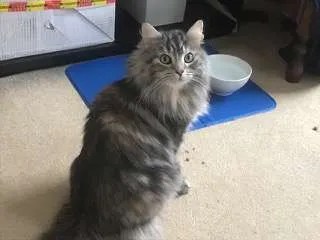
Currently I’m writing a short story/novella for a Hallowe’en collection. I love my idea, I really like my heroine and there’s a cat that I’m besotted with.
But I’ve been tripping up again and again as I try to work out where it starts.
And it took me until I started to write this blog to recognise it.
Story evolution or The Panster’s Jigsaw

Another novel on which I’m still working gave me a really interesting clue to what I am coming to think of as the Primary Pantser Problem. My book is set just before the Second World War and the main character is a young German, scion of a military family and not a member of the Nazi party. (When I started I didn’t even know he was the hero. That shows you!)
My research took me to Helmuth von Moltke. A Leader against Hitler (1972) (by Michael Balfour and Julian Frisby). He was executed in January 1945. His more famous great grand uncle was Field Marshal Helmuth Karl Bernhard Graf von Moltke who famously declared that no battle plan survives the first engagement. (More precisely, for the purist historians amongst us, Joanna Maitland, Kein Operationsplan reicht mit einiger Sicherheit über das erste Zusammentreffen mit der feindlichen Hauptmacht hinaus. From “Über Strategie” 1871.)

It struck a real chord with me. Every plan for a book that I have ever made fell at the end of the first chapter. With my romantic fiction, I was content to look on the early stuff as a place-holder and leave it until I finished the first draft. But with genres where I am less experienced, I lose my nerve. I keep twiddling.
Conclusion: now that I have actually identified the principle that the opening draft will be White Noise, I need to accept that I shall be writing two sorts of narrative. One will be continuous prose. The other will be conversations, actions, moments that will, bit by bit, fit together in ever-increasing harmony, much like the pieces of a jigsaw, until the whole narrative eventually becomes clear.
And I’ve found out how to go back to my story, play with the pieces, put them together in ever increasing groups, discard the ones I don’t need now – and finish it. Hope this helps anyone else in the same position.

Having watched you struggle with plot over many years now, Sophie, I have mixed emotions. Sympathy, yes, and delight if you’ve finally slain your demon. Maybe we’ll see that cat novella really soon?? Do hope so.
Working on it. Heat getting to me a bit, though, but getting to my poor little Battersea cat even more. Every time I stop and say, “I can’t,” imagine remind myself that at least I’m not covered in fur.
Such an interesting post, Sophie and congratulations on getting through the pain barrier. I’m a pantster to my marrow. I have watched with envy as colleagues throw down dirty drafts, getting down the bones with speed and then putting on the flesh of the story. Plotting, when I’ve tried it, kills the impetus to write the story stone dead. Flying into the mist worked for me when I was writing romance – I love the surprises – and I’m still working that way now I’m writing crime. It’s the inciting incident that gets me going every time. A meet-cute or a suspicious death… From there on my protagonist and I are working together, both of us inching our way to the conclusion. It takes longer and isn’t for the faint-hearted, but it’s the only way I can write.
I’ve always respected (and envied) the disciplined way you fly into the mist, Honourable Fellow Pantser. Keep at it!
Interesting, Sophie. I am a pantser, but I do like to add an adventurous plot to my romances, so all hints and tips are useful. thank you!
Oh dear, I think I may have been a bit over-enthusiastic. Not at all sure this way will work for everyone, Sarah. I was just so relieved that I’d found a way round my bullying left brain nagging me about story structure, that I just splurged.
But my Black Cat story is certainly, getting up speed now, if not quite flying yet.
I’ve read Sophie Weston, Sophie Page and Lucy Merritt multiple times, so you are doing something very right.
Oh what a lovely thing to say, Nancy. Made my day! You are a Treasure. Thank you.